Philadelphia and the 250th Birthday of America: Why This City Is the Heart of It All
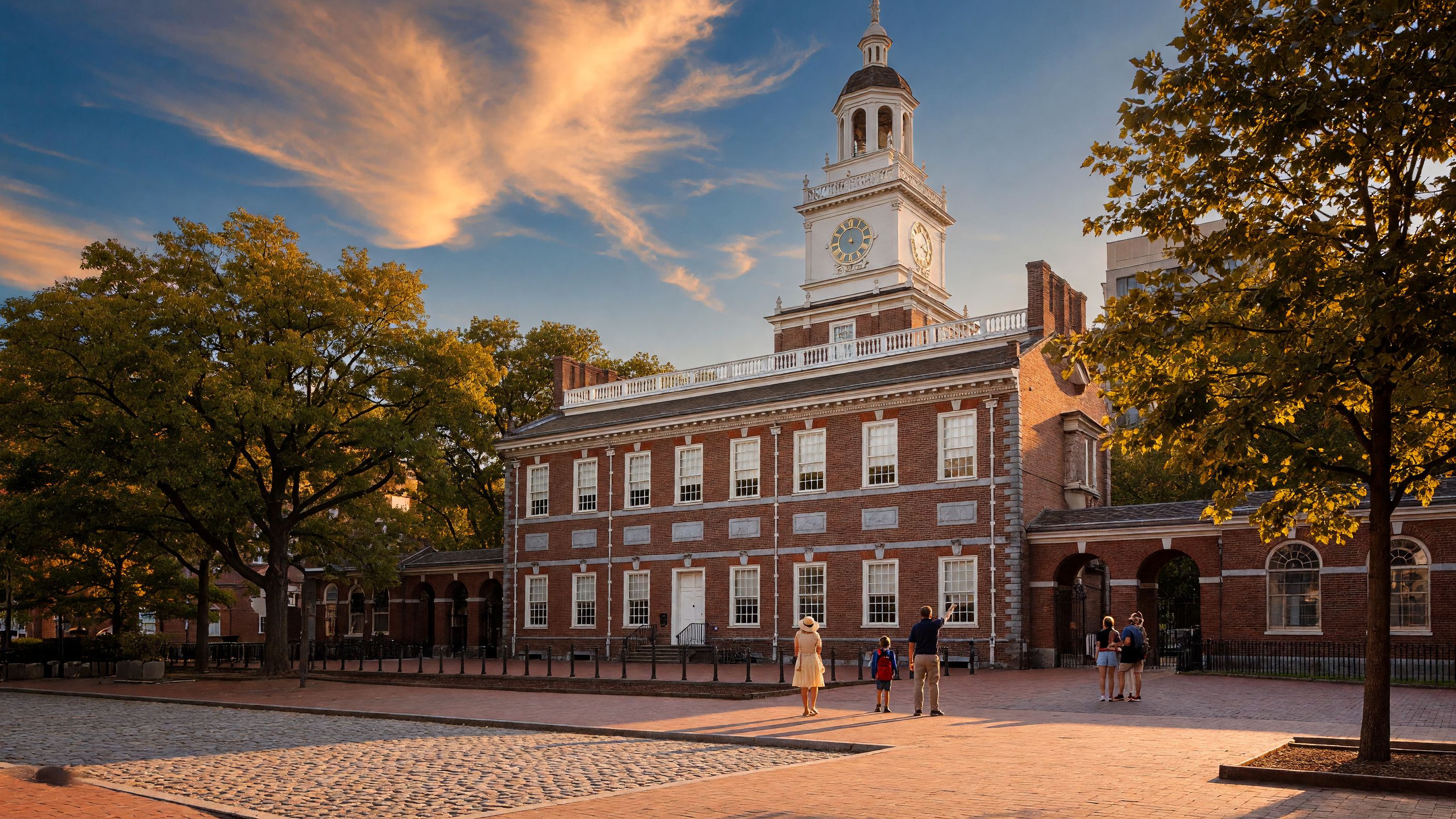
There's something you feel when you walk down Chestnut Street toward Independence Hall — a sense that you're standing on ground that mattered. Not in some abstract, textbook way, but in the way you can almost hear the murmur of voices through the walls. This is where the United States of America began. And in 2026, the country turns 250 years old, and Philadelphia is once again at the center of it all.
This is the semiquincentennial — America's 250th birthday — and there's no city more fitting to lead the celebration than the one where it all started. If you live here, if you've spent any time walking these streets, you already know: Philadelphia doesn't just have history. It is history.
Where Independence Was Declared
On July 4, 1776, the Second Continental Congress adopted the Declaration of Independence inside what we now call Independence Hall. But the story really started a few days earlier, on July 2, when the delegates actually voted in favor of independence from Great Britain. John Adams, in a letter to his wife Abigail, famously predicted that July 2nd would be celebrated as the great anniversary — but it was the 4th, the date the Declaration was formally signed and published, that stuck.
The document itself — "We hold these truths to be self-evident, that all men are created equal" — was radical in its time. It was also, like most things in Philadelphia, a product of fierce debate, compromise, and the kind of stubborn civic engagement that this city has never lost. Thomas Jefferson drafted it. Benjamin Franklin and John Adams edited it. The Pennsylvania Assembly debated it. And it all happened right here, within a few blocks of where you can grab a cheesesteak today.
The Liberty Bell: A Symbol That Refused to Be Silent
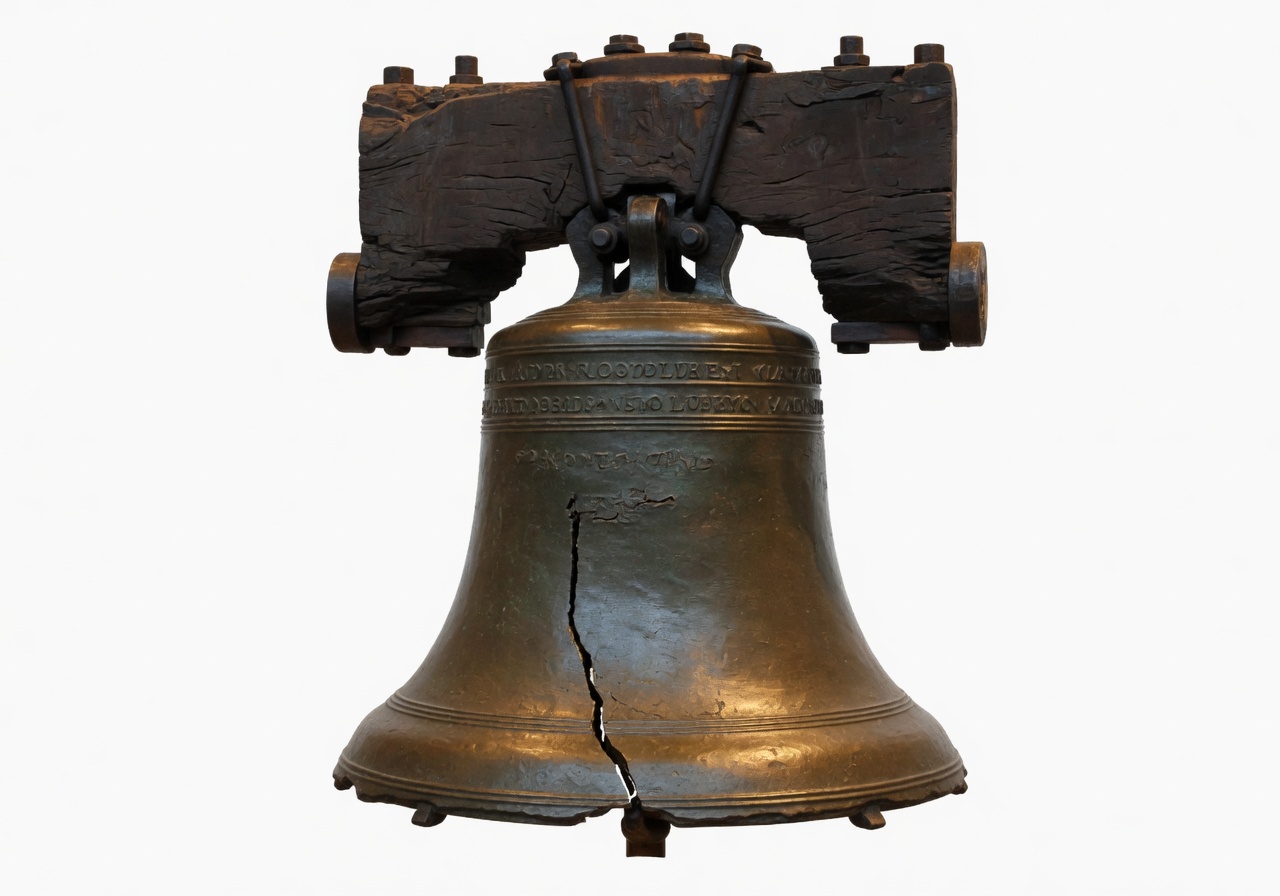
The Liberty Bell is probably the most recognized symbol of American independence, and its home is just steps from Independence Hall at the Liberty Bell Center on Market Street. Cast in 1753, the bell originally hung in the Pennsylvania State House (now Independence Hall) and was rung to mark significant occasions — including, tradition holds, the first public reading of the Declaration of Independence on July 8, 1776.
The crack? That's part of the story, too. Whether it happened in 1752 when the bell first arrived from London, during a funeral procession for Chief Justice John Marshall in 1835, or some time in between, nobody knows for certain. But the crack became the metaphor — a nation that was imperfect from the start, but kept ringing anyway. That feels very Philadelphia to me.
Every year, thousands of visitors pass through to see the bell up close. But if you live here, you've probably walked past it dozens of times on your way to lunch or to catch the Market-Frankford Line. It's one of those things that locals sometimes take for granted — but this year, it's worth stopping. This isn't just a bell. It's the sound of a city that decided the world could be different.
The Constitutional Convention: Getting It Right
If the Declaration of Independence was the moment Philadelphia said "we're doing this," the Constitutional Convention of 1787 was the moment the city said "let's do this right." Eleven years after independence was declared, the young nation was struggling under the Articles of Confederation — a weak central government, no executive branch, no federal courts, and states that were essentially operating as separate countries.
Fifty-five delegates gathered in the same room at Independence Hall — the Assembly Room — to fix it. George Washington presided. James Madison kept the notes that would become the foundation of constitutional scholarship. Benjamin Franklin, at 81, was the oldest delegate and reportedly had to be carried into the building in a sedan chair. The debates lasted four months, from May through September 1787, and the result was the United States Constitution — the oldest written national constitution still in force.
The compromises that shaped it — the Great Compromise, the Three-Fifths Compromise, the structure of the Senate and House — were hammered out in that room. Some of those compromises carry stains that America is still reckoning with today. But the framework itself, the idea that a government could be designed on paper, debated openly, and ratified by the people, was revolutionary. And it happened here.
America's First Capital
Before Washington, D.C. existed, Philadelphia was the nation's capital. From 1790 to 1800, while the federal district was being built along the Potomac, Philadelphia served as the temporary seat of the federal government. George Washington's second inauguration took place at Congress Hall on Chestnut Street in 1793. John Adams lived and worked from the President's House on Market Street. The Supreme Court, the Treasury, the State Department — all operating within walking distance of each other in what is now Old City.
Ten years may not sound like much, but it was enough to establish Philadelphia as a political center of gravity. And when the government moved south, the city didn't fade. It kept building — institutions, universities, industries, and the kind of stubborn civic identity that has defined Philadelphia ever since.
What the 250th Means for Philadelphians Today
This year, Philadelphia is marking the semiquincentennial with a year-long calendar of events and celebrations. The centerpiece is Wawa Welcome America, the 16-day festival running from June 19 through July 4 — the largest Independence Day celebration in the country. It includes six nights of fireworks, free museum days, a massive parade, concerts, a Juneteenth Block Party, and events across the city's neighborhoods.
But 250 is more than a party. It's a moment to look at where we are and where we're headed. Philadelphia in 2026 is a city of 1.6 million people, more than 100 distinct neighborhoods, and a cultural energy that rivals cities twice its size. The dining scene is nationally recognized. The arts community is thriving. The neighborhoods — from Fishtown to Graduate Hospital, from Mt Airy to Passyunk Square — are more vibrant and connected than ever.
The same spirit that made Philadelphia the birthplace of independence — the willingness to argue, to build, to push for something better — is alive in the people who live here today. We argue about parking, about the best hoagie spot, about whether the Eagles are going to have a good season. But underneath all of that, there's a shared sense of ownership. This city belongs to the people in it.
And that's what I think the 250th anniversary really means. It's not just about celebrating what happened in 1776 or 1787. It's about recognizing that the experiment those men started in this city is still ongoing. Still being debated. Still being refined. Still belonging to the people who show up for it.
A City Worth Celebrating
I've spent 26 years in Philadelphia real estate, and if there's one thing I've learned, it's that people don't just move to Philadelphia for the housing prices or the job market. They move here because there's a feeling in this city — a groundedness, a realness — that you don't find everywhere. The history is part of that. Not the history you learn in school, but the lived history. The fact that the building where your country was born is just a few blocks from the office where you work or the park where you walk your dog.
So this July, as the fireworks go off over the Parkway and the Liberty Bell gets its moment in the spotlight once again, take a minute to look around. You live in the city where America started. That's not nothing.
Happy 250th, Philadelphia. You've earned the celebration.
Love Living in Philadelphia? Let's Talk.
Whether you're considering buying your first home in this city, thinking about selling, or just want to know more about what makes Philadelphia's neighborhoods special, I'm here to help. No pressure — just honest local expertise from someone with 26 years in Philadelphia real estate.
With 26 years of experience in Philadelphia real estate, I help buyers and sellers navigate the city's neighborhoods with honest, local expertise. Licensed in PA (RS349905) and NJ (1969348).
Schedule a Consultation