Graduate Hospital: Philadelphia's Most Walkable Neighborhood South of Center City
Graduate Hospital is one of those Philadelphia neighborhoods that quietly delivers on almost everything people say they want in a home — walkability, restaurants, parks, community, and a genuine sense of place — without the price tag or the crowds that come with the neighborhoods just north of it. Locals call it G-Ho, or sometimes "South of South" or "Southwest Center City," and the multiple nicknames hint at something important: this neighborhood is still defining itself. Over the past decade, it has transformed from one of Philly's overlooked pockets into one of its most compelling places to live, particularly for young professionals and first-time buyers who want to be close to everything without paying Rittenhouse prices.
Where Exactly Is Graduate Hospital?
Graduate Hospital sits in a precise, almost suspiciously convenient location. The boundaries are South Street to the north, Washington Avenue to the south, the Schuylkill River to the west, and Broad Street to the east. That puts it squarely between Center City and South Philadelphia, with University City — home to Penn and Drexel — just across the South Street Bridge. You can walk to Rittenhouse Square in about 15 minutes, catch a SEPTA bus on Broad Street, or bike the Schuylkill River Trail to the Art Museum in under ten minutes.
The Walk Score tells the story: 95 out of 100, making it one of the most walkable neighborhoods in the entire city. Grocery stores, pharmacies, coffee shops, restaurants, and parks are all within easy reach on foot. For anyone who has ever said they want to "live somewhere they don't need a car," Graduate Hospital is one of the few Philadelphia neighborhoods where that statement is genuinely true.
A History That Goes Deeper Than You'd Expect
The neighborhood takes its name from a medical institution, not a university. The Philadelphia Polyclinic, founded in the late 19th century, became the teaching hospital for Penn's Graduate School of Medicine in 1916 and was known as Graduate Hospital. The facility operated on 18th Street between Lombard and South until it closed in the 1980s, but the name stuck — and so did the neighborhood's identity as a place with deep institutional roots.
Before the hospital era, the area was settled by early colonists in the 17th century, making it one of the oldest continuously inhabited parts of Philadelphia. The neighborhood played a role in early American naval history — the first iteration of what would become the U.S. Naval Academy was established here in 1838, before relocating to Annapolis. In more recent decades, Graduate Hospital has been home to a vibrant, close-knit community, with churches, businesses, and cultural institutions that have shaped the neighborhood's character for generations.
That layered history matters when you're evaluating a neighborhood. Graduate Hospital isn't a blank slate that developers just discovered — it's a place with roots, and the best parts of its evolution have built on what was already here rather than erasing it.
The Dining and Coffee Scene
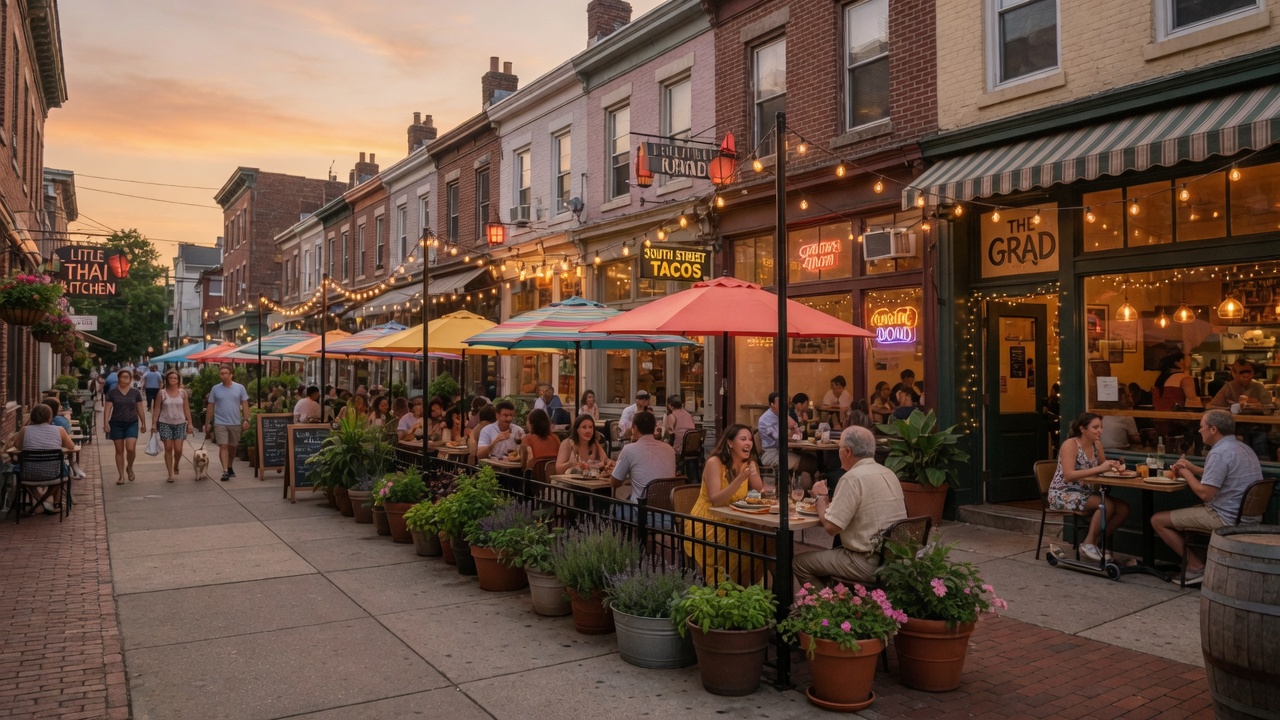
If Graduate Hospital has a main character, it's South Street West — the stretch of South Street west of Broad that cuts through the heart of the neighborhood. This corridor has quietly assembled one of the most diverse and genuinely good dining scenes in Philadelphia, and it does it without the pretension or the waits you'll find in Rittenhouse or Old City.
Sabrina's Cafe on South Street is a neighborhood anchor — a BYOB brunch spot that has earned a loyal following for its stuffed French toast, creative egg dishes, and portions that justify the inevitable wait on weekend mornings. It's the kind of place that makes you feel like a local the second time you walk in.
19 Degrees Cafe on Christian Street has become the neighborhood's go-to for specialty coffee and light bites. The space is bright, the espresso is well-pulled, and it attracts the mix of remote workers, parents, and students that you'd expect from a neighborhood positioned between Center City and University City.
Ants Pants Cafe on South Street brings Australian-inspired brunch to the neighborhood — think ricotta hotcakes, flat whites, and a relaxed atmosphere that makes it easy to linger. For something more casual, South Street Souvlaki has been serving Greek classics for years, and the gyro platter remains one of the best cheap eats in the area.
The dining scene extends well beyond South Street. Washington Avenue — the neighborhood's southern border — has emerged as one of Philadelphia's most exciting international food corridors. Ethiopian restaurants, Mexican taquerias, and Vietnamese pho spots line the street, reflecting the diverse communities that have long called this part of South Philly home. It's the kind of dining corridor that food writers love and that actual neighborhoods depend on — affordable, diverse, and unpretentious.
The Schuylkill River Trail: Your Front Yard
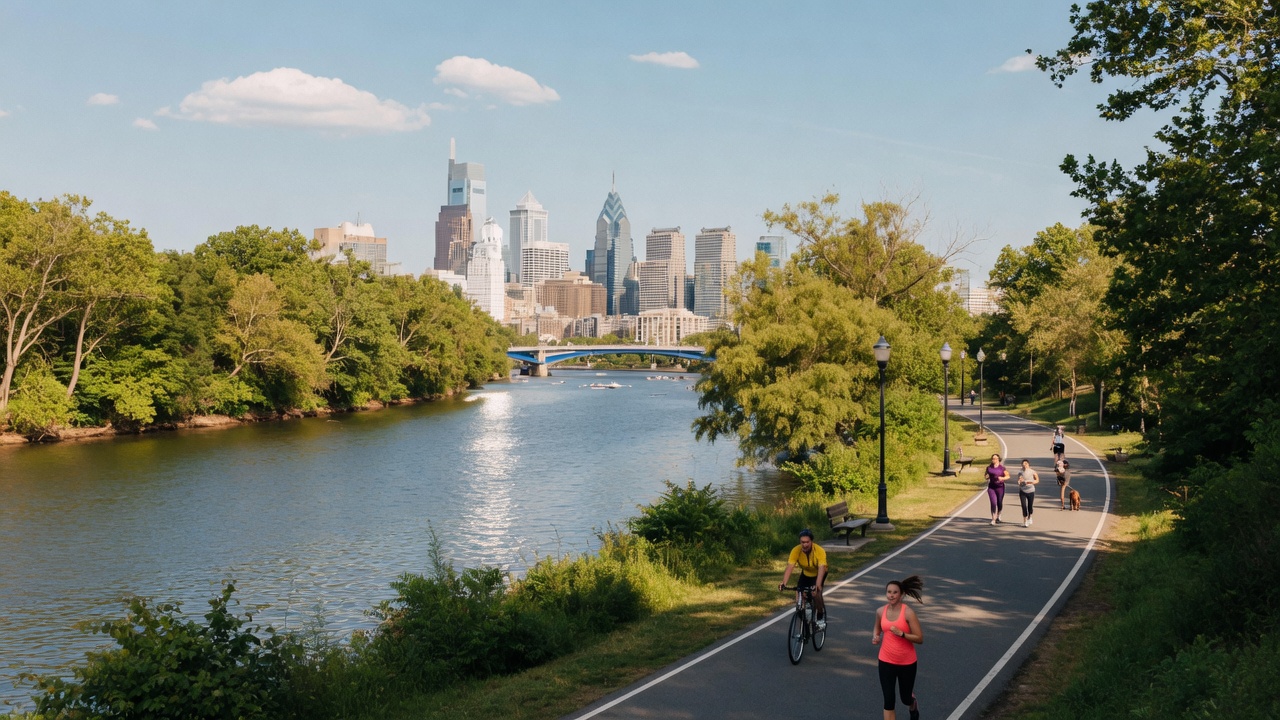
If there's one amenity that elevates Graduate Hospital above similarly priced neighborhoods, it's this: the Schuylkill River Trail runs right along the neighborhood's western edge, giving residents immediate access to one of the best urban trail systems in the country. This isn't a trail you have to drive to — you can walk from your front door to the trailhead in minutes.
The trail itself is a paved, multi-use path that stretches for miles in both directions — north toward the Art Museum and Boathouse Row, south toward the Navy Yard and South Philadelphia. It's popular with runners, cyclists, and families on weekend mornings, and the scenery — the river on one side, the city skyline on the other — makes it feel like an escape from urban life even though you're still inside it.
The standout feature is the Schuylkill Banks Boardwalk, a 2,000-foot promenade that floats above the river itself, offering unobstructed skyline views and one of the most unique walking experiences in Philadelphia. A spiral staircase connects the boardwalk to the trail below, and on clear evenings, the walk from Graduate Hospital to the boardwalk for sunset has become a genuine neighborhood ritual. In 2025, the trail was further extended with a 650-foot cable bridge connecting to the Christian Street section, making the trail network even more accessible from within the neighborhood.
The South Street Bridge provides a direct pedestrian and cycling connection from Graduate Hospital across the Schuylkill to University City. This is a bigger deal than it sounds — it means you can bike from your home in G-Ho to Penn's campus or the Drexel area without touching a busy road, which makes the neighborhood surprisingly practical for students, academics, and professionals working in University City.
Parks and Green Space
Beyond the river trail, Graduate Hospital has its own parks that serve as daily gathering spots for residents. Julian Abele Park, named for the architect who designed much of Duke University's campus, is a neighborhood green space that hosts community events and serves as a natural meeting point for families and dog walkers.
Schuylkill River Park, accessible from the neighborhood's western edge, includes playgrounds, dog runs, and open lawn space with river views. For a neighborhood this dense — Graduate Hospital has one of the highest population densities in Philadelphia, at roughly 32,000 to 35,000 people per square mile — having quality green space within walking distance is essential, and the park system delivers.
The neighborhood also supports several community gardens, which have become important social anchors. In a neighborhood that's seen rapid growth and demographic change, the gardens serve as places where long-time residents and newer arrivals interact around a shared activity — and that kind of organic community-building matters more than any marketing pitch about "neighborhood vibe."
Housing and Real Estate
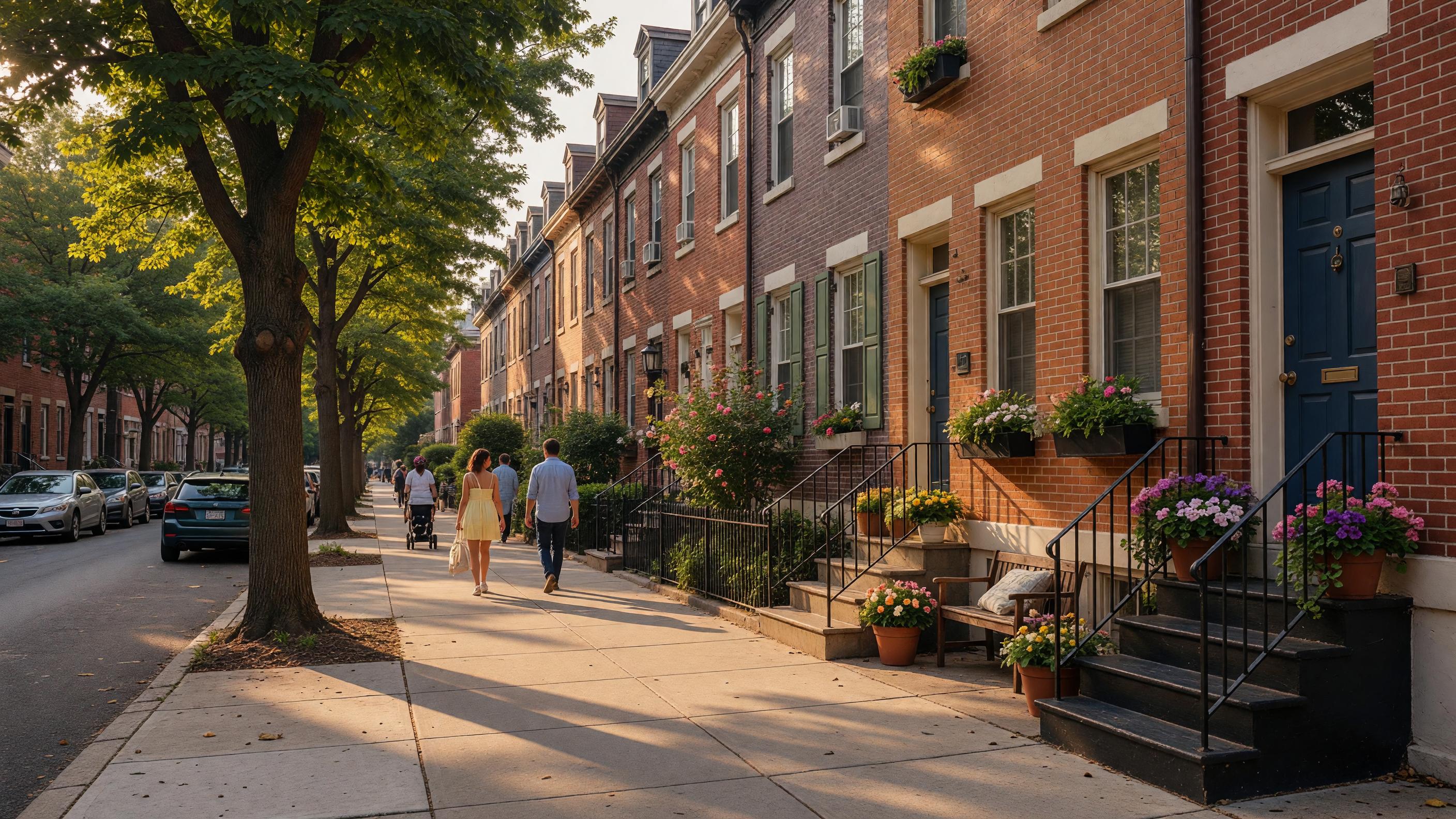
Graduate Hospital's housing stock is overwhelmingly rowhouse-based — classic Philadelphia brick rowhomes, many of them recently renovated with modern interiors behind their traditional facades. The neighborhood has seen a significant wave of new construction as well, with mixed-use developments along Washington Avenue and several new residential projects converting former industrial or commercial sites into apartments and townhomes.
As of mid-2026, the median home sale price in Graduate Hospital sits around $533,000 to $550,000, depending on the source and the specific block. That's notably higher than the Philadelphia citywide median of roughly $272,000, but it reflects the premium buyers place on Graduate Hospital's location, walkability, and proximity to Center City. For context, comparable walkable neighborhoods north of South Street — like Rittenhouse Square or Fitler Square — command higher prices, making G-Ho a relative value for buyers who want the same lifestyle at a lower entry point.
The median household income in the neighborhood is approximately $101,800, well above the city average, and the demographic skews toward young professionals and couples in their late 20s to early 40s. First-time buyers are particularly drawn to the neighborhood because the rowhouse format offers a path to homeownership that's more attainable than a single-family home, while the walkable setting means you're not sacrificing convenience for affordability.
New construction has been active, with major projects including a 247-unit mixed-use development at 2101 Washington Avenue nearing completion in 2025, and several smaller residential projects filling in vacant or underused lots throughout the neighborhood. The trend is clearly toward increased density, which brings both opportunities — more housing stock, more commercial amenities — and the challenges that come with rapid growth. For current homeowners, the trajectory has been consistently positive: property values in Graduate Hospital have appreciated steadily over the past decade, and the fundamentals supporting that appreciation remain strong.
Schools and Family Life
Families considering Graduate Hospital have a reasonable range of school options, though it's worth noting that Philadelphia's school landscape — like most major cities — requires research. On the public side, Marian Anderson Neighborhood Academy (K–8) and Edwin M. Stanton School (PreK–8) serve the neighborhood directly. Chester A. Arthur School is also nearby and has built a solid reputation among families.
Charter school options are available in the surrounding area, including Independence Charter School, and the neighborhood's position between Center City and University City means that additional educational options — both public and private — are accessible by transit. For higher education, the University of Pennsylvania and Drexel University are a short bike ride or bus ride away across the South Street Bridge.
What makes Graduate Hospital work for families goes beyond the schools themselves. The neighborhood's walkability means kids can walk to parks, restaurants, and activities without relying on a car. The Schuylkill River Trail provides a safe, car-free space for family bike rides. The community gardens and neighborhood events create the kind of social infrastructure that makes parenting in a dense urban environment feel manageable rather than isolating. And the proximity to Center City means that the Please Touch Museum, the Franklin Institute, and other family-friendly cultural institutions are minutes away.
Getting Around
Graduate Hospital's transportation options are one of its strongest selling points. The neighborhood is served by multiple SEPTA bus routes along Broad Street, South Street, and Washington Avenue, providing connections to the Broad Street Line subway, the Market-Frankford Line, and regional rail. The South Street Bridge connects directly to University City and 30th Street Station — Amtrak's main Philadelphia hub — making regional and national travel straightforward.
For cyclists, the Schuylkill River Trail and the neighborhood's relatively flat terrain make biking a practical daily transportation option, not just recreation. Bike lanes along Broad Street and South Street provide connections to Center City and beyond. For drivers, access to I-76 (the Schuylkill Expressway) is available via the South Street or Walnut Street exits, though — like all Philadelphia neighborhoods near the expressway — traffic can be heavy during rush hours.
The Walk Score of 95 means that for most daily errands — groceries, coffee, dining, pharmacy, gym — you won't need a car at all. That's a lifestyle advantage that compounds over time: less time in traffic, lower transportation costs, and more incidental exercise from walking to the places you already need to go.
What It's Actually Like to Live Here
Here's what I tell people who are considering Graduate Hospital: walk down South Street West on a Saturday afternoon. Start near Broad Street and head west. You'll pass coffee shops with people working on laptops, a brunch spot with a line out the door, a vintage clothing store, a taqueria, a yoga studio. The rowhouses are well-maintained, the sidewalks are wide, and the tree canopy — while not as dense as some older Philadelphia neighborhoods — is growing. You'll see families with strollers, couples walking dogs, and a general energy that feels active without being frantic.
Then walk south to Washington Avenue. The character shifts — the buildings are larger, the restaurants are more internationally diverse, and the commercial energy is different. This is where you'll find the Ethiopian injera, the Mexican panaderias, and the Vietnamese pho that make this corridor one of the most underrated food streets in Philadelphia. The contrast with South Street West is part of what makes the neighborhood interesting — it's not one thing, it's several things layered together.
And then walk west to the Schuylkill. The river trail opens up, the skyline appears across the water, and you realize that this neighborhood — which felt urban and dense a few blocks back — is also, somehow, a waterfront community. That combination of urban density and outdoor access is rare in Philadelphia, and it's the quality that I think ultimately defines Graduate Hospital.
Is Graduate Hospital Right for You?
Graduate Hospital works best for buyers who prioritize walkability, dining diversity, and a location that puts Center City, University City, and South Philadelphia all within easy reach. It's ideal for young professionals who commute to Center City or University City and want to come home to a neighborhood with its own identity — not just a residential buffer between two more interesting places. It's strong for first-time buyers who want the rowhouse experience with modern renovations and a genuine neighborhood feel.
What you won't find here is the historic charm of Old City, the luxury retail of Rittenhouse, or the green, suburban feel of Chestnut Hill. The housing stock is primarily rowhouses and apartments, not detached homes. The park system is good but not as expansive as Fairmount Park or the Wissahickon. And the neighborhood's rapid growth means that some blocks are more polished than others — the transition is still in progress, which is either exciting or uncertain depending on your perspective.
But for the people who choose Graduate Hospital, the equation is simple: you get a Walk Score 95 location, a real dining scene, river trail access, and a community that's still building its identity — all at a price point that undercuts the neighborhoods just to the north. That's a combination that's hard to beat in Philadelphia, and it's why G-Ho has quietly become one of the most desirable addresses in the city for buyers who know what they want.
Thinking about buying or selling in Graduate Hospital?
Whether you're exploring Graduate Hospital as a potential home or you're a current homeowner curious about your property's value in a rapidly appreciating neighborhood, I'd love to help. With 26 years of experience in the Philadelphia market, I can give you the honest, local perspective you need to make a confident decision.
With 26 years of experience in Philadelphia real estate, I help buyers and sellers navigate the city's neighborhoods with honest, local expertise. Licensed in PA (RS349905) and NJ (1969348).
Schedule a Consultation