Brewerytown: Philadelphia's Beer Capital Turned Neighborhood on the Rise

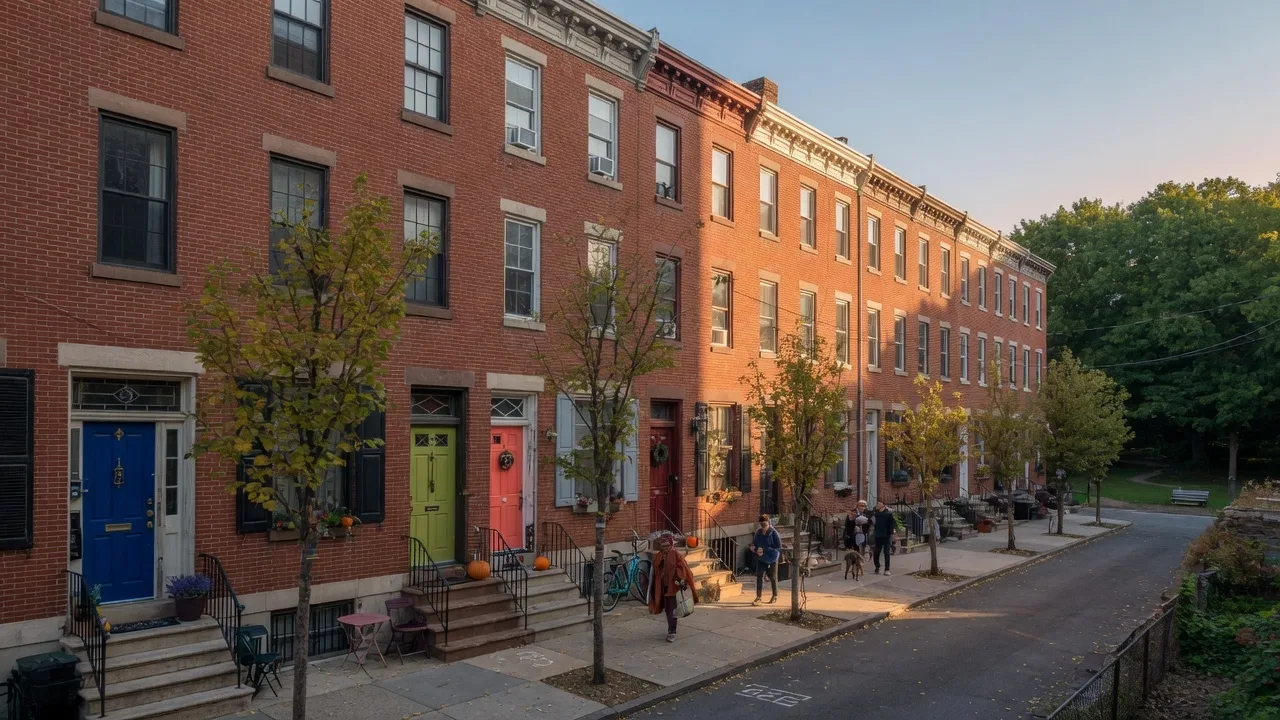
There's a stretch of Philadelphia just northwest of the Art Museum where the streets are lined with Victorian brick rowhouses, East Fairmount Park is at your doorstep, and the neighborhood's name tells you exactly where you're standing. Brewerytown got its name from the German lager breweries that dominated this corridor in the late 1800s — and while the breweries are long gone, the neighborhood they built is having a genuine moment. It's one of the most compelling value stories in Philadelphia right now, and it's worth knowing what makes it work.
Where Exactly Is Brewerytown?
Brewerytown sits along the western edge of North Philadelphia, roughly bounded by the Schuylkill River and Fairmount Park to the south and west, Girard Avenue to the north, and the corridor around 27th Street to the east. It's directly adjacent to Fairmount — you can walk from the Art Museum to the heart of Brewerytown in about 10 minutes — and it shares a border with Strawberry Mansion and the evolving corridor along 31st Street.
The neighborhood straddles the 19121 and 19130 ZIP codes, and its geography gives it an unusual advantage: you're within the city, paying city taxes and using city services, but you're backed up against 2,000 acres of parkland. It's the kind of location that doesn't come along often in Philadelphia.
A History Brewed in Lager
Brewerytown's story begins with beer. In the 1880s and 1890s, the neighborhood was home to an extraordinary concentration of German lager breweries — at their peak, more than a dozen major breweries operated within a few blocks of each other. The Bergner & Engel Brewery, the F.A. Poth Brewery, and the Gambrinus Sanger Krantz building were among the largest, producing millions of barrels of lager that shipped across the East Coast. The neighborhood earned the nickname "Beer Capital of America," and it wasn't an exaggeration.
The breweries brought workers, who built the dense grid of Victorian rowhouses that still define the streetscape today. The Brewerytown Historic District is now listed on the National Register of Historic Places, encompassing 380 contributing buildings — primarily Victorian-era rowhouses, industrial brewery structures, and the commercial corridors that served the brewing workforce.
Prohibition killed the breweries, and the neighborhood spent decades reinventing itself. Through the mid-20th century, Brewerytown was a predominantly working-class community of longtime residents. The rowhouses aged, some deteriorated, and the neighborhood endured the same cycles of disinvestment that affected much of North Philadelphia. But the bones were always there — solid masonry, a walkable grid, proximity to the river, and blocks of Victorian architecture that other cities would envy.
The Neighborhood Today
As of 2026, Brewerytown is in the middle of a transformation. The population sits around 10,800, with a median age of 35. New apartment buildings and renovated rowhouses are drawing young professionals, artists, and small business owners into a neighborhood that was, even a decade ago, largely overlooked by the Philadelphia real estate market.
The pace of change is real but measured. You'll see a freshly renovated rowhouse with a modern kitchen next door to a home that's been in the same family for 40 years. New construction condos go up on blocks where a few years ago there were vacant lots. It's not the wholesale transformation you see in Fishtown — it's more gradual, and the neighborhood's existing community is still very much present.
What the Housing Market Looks Like
Here's the pitch that makes Brewerytown stand out: you're buying into a neighborhood with genuine momentum, direct park access, and historic character at prices that are still significantly below the Philadelphia median.
As of mid-2026, median home sale prices in Brewerytown hover around $280,000 to $315,000, depending on the source. That's roughly 10–20% below the citywide median and well under what comparable square footage would cost in Fishtown, Graduate Hospital, or East Passyunk. The price per square foot averages around $180–$200, and the market moves relatively quickly — homes typically sell in 49 to 61 days.
The housing stock is overwhelmingly brick rowhouses, most built between 1880 and 1920, with two- and three-story configurations, 12- to 16-foot-wide lots, and the solid masonry construction that defines this era of Philadelphia building. Many have been fully renovated with modern interiors — updated kitchens, finished basements, new HVAC systems — while retaining the original brick facades and period details. You'll also find a growing number of new-construction condos and townhomes, particularly along the 31st Street corridor, where developments like the Storehouse Lofts have added contemporary options to the mix.
For investors, multi-family properties are available with a median listing price around $675K, and average one-bedroom rent sits near $1,627. The rental market is supported by Brewerytown's proximity to the Art Museum, Center City, and University City — all of which are within easy reach.
Walkability and Getting Around
Brewerytown carries a Walk Score of 80 to 82 — classified as "Very Walkable" — which means most daily errands can be accomplished on foot. The score is anchored by the commercial clusters along Girard Avenue, 31st Street, and the developing corridors where new shops and restaurants are filling in.
Transit: Several SEPTA bus routes serve the neighborhood. The Route 38 runs through Brewerytown connecting to Center City, and the Route 49 — which launched in 2019 — links Brewerytown to University City, Fairmount, and Grays Ferry. The Route 7 also provides service to the area. While there's no rail station directly in Brewerytown, the Broad Street Line at Girard Avenue and the Regional Rail stations at 30th Street Station are both accessible by bus. Expect a 25- to 40-minute commute to Center City depending on your starting point and mode.
For drivers, Brewerytown's position near I-76 and the Schuylkill Expressway provides highway access, and 30th Street Station — Amtrak's busiest hub in the region — is less than 10 minutes away by car. The location is genuinely convenient for anyone who splits time between Philadelphia and the surrounding suburbs or commutes to the New Jersey side.
Parks and Outdoor Access
This is where Brewerytown has a genuine edge over many of its competitors. The neighborhood backs directly onto East Fairmount Park, one of the largest urban park systems in the country. The Schuylkill River Trail runs along Brewerytown's southern edge, connecting you to a paved trail network that stretches from Center City to Valley Forge and beyond — perfect for running, cycling, or weekend rides.
Within East Fairmount Park, you'll find Lemon Hill Mansion, The Cliffs, Ormiston Mansion, ball fields, disc golf courses, and the Discovery Center — an outdoor adventure park built around the reservoir. The park is essentially Brewerytown's backyard, and the ability to walk out your front door and be on a river trail in five minutes is a quality-of-life advantage that few Philadelphia neighborhoods can match.
Closer to home, Athletic Square Park offers a recreation center and public pool — a genuine neighborhood gathering spot during summer months — and the Rail Park, Philadelphia's emerging high-line project, is extending toward Brewerytown as part of its planned greenway corridor.
The Food Scene
Brewerytown's restaurant scene is growing quickly and reflects the neighborhood's multicultural character. It's not a fine-dining destination — yet — but the variety and quality of what's here is impressive for a neighborhood still building its identity.
The Brewerytown Food Hall at 1363 N. 31st Street is the neighborhood's centerpiece dining destination — a 9,500-square-foot space operated by Glu Hospitality that houses seven restaurant concepts under one roof, including Figo Ristorante, Izakaya by Yanaga, Hunnies Crispy Chicken, and Tiny's Burger Joint. With three bars, a lounge, outdoor deck, and seating for 300, it's become a genuine community gathering point since opening in 2023.
Around the neighborhood, the dining is diverse and unpretentious. Era at 2743 Poplar Street serves some of the most authentic Ethiopian food in the city — the doro wot and gomen are standouts — in a dive-bar setting with a pool table and quizzo nights. Irie Jamaican Restaurant piles on the curry goat, oxtail, and jerk chicken. Baby's Kusina + Market on West Girard Avenue brings Filipino-inspired dishes to the corridor, and iMunch Cafe on 31st Street handles breakfast and brunch with chunky waffles and solid omelets.
The dining options are expanding — new spots continue to open along Girard Avenue and 31st Street — and the proximity to Fairmount's restaurant row and Center City's dining scene means you're never far from whatever you're craving.
Schools and Families
Families considering Brewerytown have access to several school options. The William D. Kelley School (PK–8) serves the neighborhood as the primary public school, and the broader School District of Philadelphia offers magnet and charter options throughout the city. Nearby, Morris Robert School (PK–8) and St. James School (grades 4–8, private) expand the range.
It's worth noting that Brewerytown sits within a corridor of educational options — the School District's magnet system, the growing number of charter schools, and proximity to the private and parochial schools in Fairmount, Strawberry Mansion, and Germantown give families a wider selection than Brewerytown's own borders suggest.
For daily family life, the neighborhood works well. Athletic Square Park's pool and recreation center, direct access to Fairmount Park's playgrounds and trails, and the neighborhood's relatively quiet interior streets make it practical for families with young children. The 35 median age and growing number of young families signal a community that's investing in its future.
The Landmarks Worth Knowing
Beyond the rowhouses and the restaurants, Brewerytown has several landmarks that anchor its identity:
- ● The Brewerytown Historic District — 380 contributing buildings on the National Register of Historic Places, encompassing the Victorian rowhouses and brewery structures that defined the neighborhood's original identity.
- ● The Hatfield House — Built in 1760, this historic home sits near the border of East Fairmount Park and is one of the oldest structures in the area, predating the neighborhood's brewery era by a full century.
- ● Lemon Hill Mansion — An 1800 Federal-style mansion in East Fairmount Park, offering tours and serving as a venue for community events throughout the year.
- ● The Schuylkill River Trail — A paved multi-use trail along the river's edge that connects Brewerytown to Center City, University City, and the suburban trail network.
The Vibe
Brewerytown has the feel of a neighborhood that knows something good is happening but isn't quite ready to shout about it. The streets are quieter than Fishtown's, the restaurants are more neighborhood-oriented than commercial, and the pace of development — while accelerating — hasn't erased the community that was here before the new residents arrived.
You'll see kids playing on sidewalks, neighbors working on their gardens, and the kind of block-level community that develops when people actually own their homes and invest in their surroundings. The Victorian facades give every block a sense of character and history that newer neighborhoods can't manufacture. And the park access — being able to walk to the Schuylkill River Trail in minutes — changes how you experience daily life in the city.
It's not perfect. Some blocks are further along in the renovation cycle than others. The commercial corridors are still filling in. And the neighborhood is evolving, which means it's in flux — the Brewerytown of 2030 will look different from the Brewerytown of 2026. But that's part of what makes it interesting: you're getting in at a point where the trajectory is clearly upward, but the prices haven't caught up yet.
Who Brewerytown Works Best For
Brewerytown is ideal for a specific buyer: someone who wants historic character, genuine park access, and a neighborhood with momentum at a price point that still allows you to build equity. It's strong for young professionals who work in Center City or University City and want a short commute with a more grounded, residential feel. It works for first-time buyers who've been priced out of Fishtown and Graduate Hospital but still want to be close to the action. And it's worth serious consideration for anyone relocating to Philadelphia from a higher-cost market — the combination of sub-$300K pricing, walkability, and direct park access is hard to find anywhere else in the city.
If you need a polished retail corridor or a turnkey nightlife scene, Brewerytown isn't there yet. But if you're looking at the long game — a neighborhood that's building something real, with the architecture, the location, and the community to support it — Brewerytown is one of the smartest bets in Philadelphia right now.
Curious About Brewerytown?
Whether you're comparing Brewerytown to other emerging neighborhoods or you're ready to see some listings in person, I'd love to help. I've been working in Philadelphia real estate for 26 years and know the trajectory of neighborhoods like this — the ones that are building momentum before the rest of the market catches on. Let's find the right home for you.
With 26 years of experience in Philadelphia real estate, I help buyers and sellers navigate the city's neighborhoods with honest, local expertise. Licensed in PA (RS349905) and NJ (1969348).
Schedule a Consultation