Northeast Philadelphia: Philly's Most Diverse Corner Has Everything You Didn't Expect
Ask most Philadelphia real estate agents about the Northeast and you'll get a vague answer about "rowhomes and the Boulevard." Ask someone who actually lives in Fox Chase, Mayfair, Bustleton, or Somerton and you'll get a different story entirely — one about 1,600 acres of Pennypack Park woodland, Uzbek plov and Georgian khachapuri on Bustleton Avenue, some of the most affordable single-family homes in the city, and a community spirit that doesn't need a trendy restaurant corridor to prove itself. Northeast Philadelphia is the city's largest section by area, home to roughly 300,000 people, and it's one of the most genuinely multicultural neighborhoods in the entire country. If you've been sleeping on the Northeast, this guide will change that.
What Exactly Is Northeast Philadelphia?
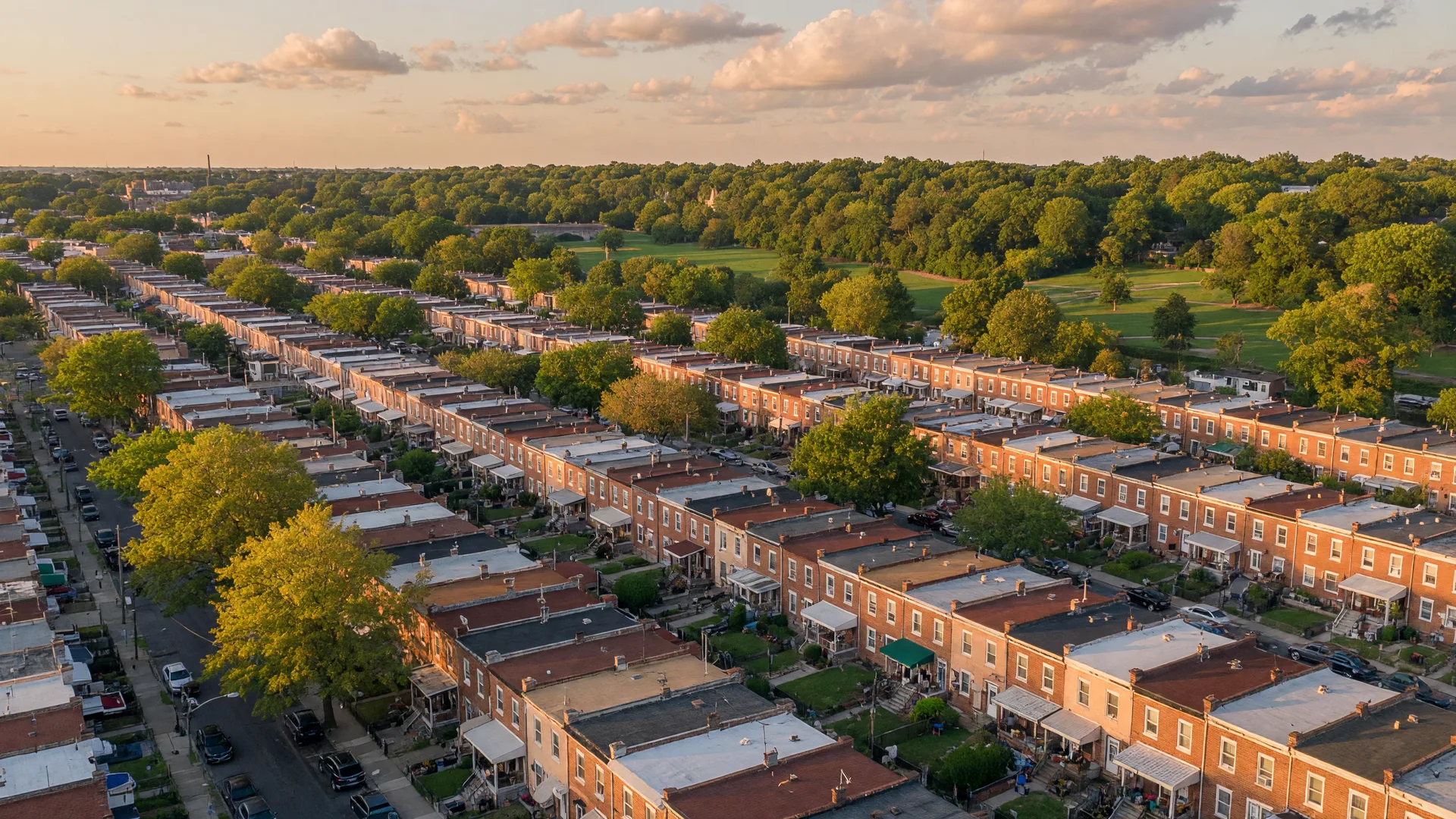
Northeast Philadelphia — often just called "the Northeast" or "the NE" — isn't a single neighborhood. It's a sprawling collection of communities that stretches from the Frankford Creek in the south to the city boundary with Montgomery County in the north and east. The area is commonly divided into the Near Northeast (Tacony, Mayfair, Holmesburg, Byberry) and the Far Northeast (Fox Chase, Bustleton, Somerton, Pine Valley, Millbrook), though locals will argue about where exactly those lines fall.
The major corridors — Roosevelt Boulevard, Frankford Avenue, Cottman Avenue, and Bustleton Avenue — each have their own personality. Roosevelt Boulevard is the commercial spine, lined with shopping centers, restaurants, and the kind of eclectic strip-mall dining that food critics travel across the city to discover. Frankford Avenue carries the history of the old Frankford Creek communities. Cottman Avenue connects the Mayfair and Rhawnhurst neighborhoods with a mix of local businesses. And Bustleton Avenue has quietly become one of the most exciting international food corridors in the entire Northeast corridor.
What ties all of these areas together is space — both physical and financial. Northeast Philadelphia has larger lots, more green space, and more single-family homes than almost anywhere else in the city. And the prices reflect it. As of mid-2026, the median home sale price in the Far Northeast is around $353,000, up 3.8% year-over-year. In the Near Northeast, the median sits around $267,000. Those numbers put real homeownership — with driveways, backyards, and basements — within reach in a way that Center City, Fishtown, and Graduate Hospital simply can't match.
Neighborhood by Neighborhood
Fox Chase
Fox Chase is the Northeast's most suburban-feeling neighborhood — tree-lined streets, detached and twin homes on generous lots, and a pace that feels more like a quiet Montgomery County suburb than a section of a major city. The neighborhood sits along the northern edge of the city, bordered by Pennypack Park to the north, which means residents have immediate access to some of the best trail systems in Philadelphia.
The crown jewel of Fox Chase is Burholme Park and the Ryerss Mansion — a historic Italianate estate built in 1859 that sits atop one of the highest points in Philadelphia. The mansion, listed on the National Register of Historic Places, houses a remarkable collection of art and artifacts, and the surrounding park offers sweeping views of the surrounding countryside. It's the kind of place that makes you forget you're inside city limits.
Fox Chase is popular with families and professionals who want the convenience of a city address with the feel of a suburban community. The homes here are largely mid-century twins and singles, many with updated interiors, and the neighborhood has a strong civic identity anchored by the Fox Chase Town Center area along Oxford Avenue and Penn Street. The Fox Chase Foxes community identity runs deep — you'll see it on banners, at block parties, and in the way neighbors look out for each other.
Mayfair
Mayfair is the heart of the Northeast — centered at the intersection of Cottman Avenue and Frankford Avenue, bounded by Roosevelt Boulevard to the west and Pennypack Park to the north. It's one of the most recognizable neighborhoods in Philadelphia, with a retro welcome sign at Cottman and Frankford that's become a local landmark.
Mayfair has deep Irish Catholic roots — for decades it was one of the most tightly-knit Irish-American communities in the city — but the neighborhood has diversified significantly. Today, Mayfair is a mix of long-time residents and newer families drawn by the affordable housing stock, the park access, and the genuine community feel. The Mayfair Third Thursday Night Market, running monthly from May through September along Frankford Avenue, has become one of the best community events in the Northeast — live music, local vendors, food trucks, and the kind of block-party atmosphere that brings the whole neighborhood out.
The dining scene along Frankford Avenue in Mayfair deserves its own mention. The Dining Car, a classic American diner that's been operating since 1960, is a neighborhood institution — the kind of place where regulars have "their booth" and the waitstaff knows your order. For something more international, Aya Asian Fusion on Frankford Avenue serves an extensive menu spanning Japanese, Chinese, Thai, and Korean dishes that consistently earns strong reviews from locals. And Jong Ka Jib, a Korean hot pot destination nearby, draws food enthusiasts from across the city for its rich, deeply flavored broths and communal dining experience.
Bustleton
Bustleton is where Northeast Philadelphia's international identity shines brightest. Located in the Far Northeast, centered around Bustleton Avenue and Street Road, this neighborhood has become one of the most diverse communities in the entire city — and one of the best places to eat in Philadelphia, if you know where to look.
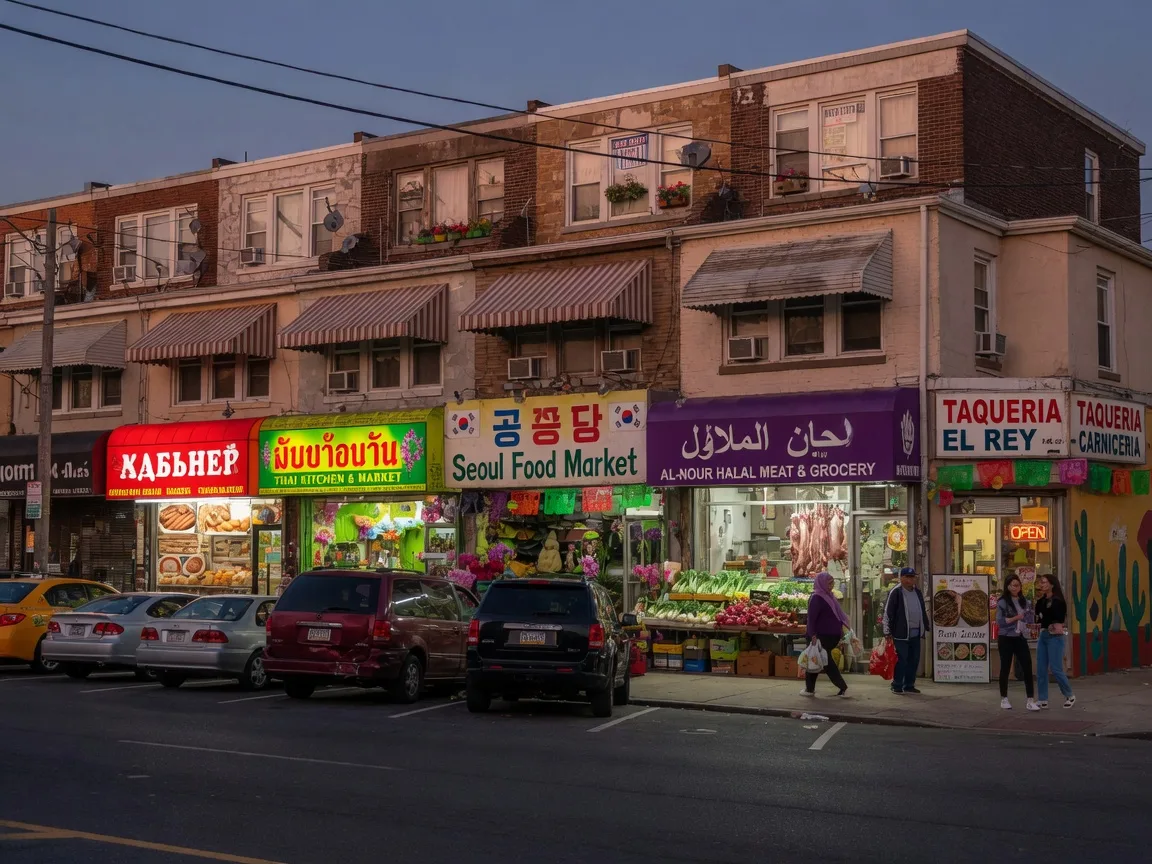
Bustleton Avenue is a culinary journey without leaving the city. Walk along the corridor and you'll find Uzbek restaurants serving plov and kebabs, Georgian kitchens with khachapuri and churchkhela, Chinese dim sum halls, Polish pierogi shops, and Russian delis stocked with imported provisions. Plov House, open 24 hours, is a destination for anyone who's never tried Uzbek cuisine — the lamb plov is rich and fragrant, served in massive communal-style portions. Lanjeron takes a fusion approach, blending French, Russian, and Thai influences in a way that shouldn't work but absolutely does. Bell's Market is a Russian and Eastern European grocery store that doubles as a cultural landmark — walk through and you'll find imported chocolates, house-smoked fish, fresh-baked bread, and shelves of products you won't find anywhere else in the city.
The Chinese community in Bustleton and the surrounding Castor Gardens area has grown significantly, bringing with it excellent restaurants and specialty markets. China Gourmet on Bustleton Avenue operates a large dim sum hall that rivals anything in Center City's Chinatown. And the Pierogi Factory on Bustleton Avenue serves handmade Polish dumplings that have earned a devoted following. This isn't a food trend or a marketing gimmick — it's a living, breathing food culture that's been developing for decades.
Beyond food, Bustleton offers strong residential neighborhoods, well-maintained homes, and access to Hayes Memorial Playground — a 20-acre recreational facility with sports fields, courts, and playgrounds that serves as the neighborhood's outdoor gathering hub.
Somerton
Somerton sits in the far northeastern corner of the city, bordering Montgomery County, and has a distinctly suburban character. The homes here are larger, the lots are wider, and the streets feel more like a planned community than a traditional Philadelphia neighborhood. Somerton is popular with families who want space, quiet, and a strong school community without leaving the city entirely.
The neighborhood is home to several cultural attractions that most Philadelphians don't know about. Glencairn Museum, a striking medieval-style castle built in the 1890s, houses an extensive collection of religious art and artifacts. PHS Meadowbrook Farm, managed by the Pennsylvania Horticultural Society, is a beautifully maintained estate that hosts seasonal events and garden tours. And The American Treasure Tour, housed in a massive former factory, is one of the most wonderfully eccentric museums in the region — a vast collection of vintage Americana, music boxes, taxidermy, and pop culture artifacts that takes hours to fully explore.
Somerton's housing stock consists primarily of singles and twins on spacious lots, with many homes built in the 1960s and 1970s. The area offers some of the most square footage per dollar in the city, and the proximity to Montgomery County means easy access to the suburban shopping, dining, and employment centers along Route 1 and the Pennsylvania Turnpike.
Tacony
Tacony is the Near Northeast's most historic neighborhood — a tight-knit community along the Delaware River that was once an industrial powerhouse. The neighborhood's name comes from an old local word meaning "the flowing waters," and the area's riverfront location gives it a geography that few Northeast neighborhoods can match.
The Tacony waterfront has seen revitalization in recent years, with the Tacony Bridge Walk and improved river access creating new public spaces along the Delaware. The Tacony Civic Association is one of the most active neighborhood organizations in the city, organizing clean-ups, festivals, and community events that keep the neighborhood connected. The housing stock is primarily rowhouses and twins, many with original architectural details, and the prices remain among the most accessible in the city.
Pennypack Park: The Northeast's Backyard
If there's one feature that defines outdoor life in Northeast Philadelphia, it's Pennypack Park — 1,600 acres of woodlands, meadows, and wetlands stretching along Pennypack Creek from the Delaware River to Montgomery County. Established in 1905, the park covers over nine miles of trails used for hiking, biking, horseback riding, and nature walks. It's the kind of green space that most major cities would kill for, and Northeast Philadelphians get to call it their backyard.
The Pennypack Trail, part of the Circuit Trails network, runs from the Delaware River waterfront through Fox Chase and Bustleton into Montgomery County — a continuous paved path that's ideal for long runs, family bike rides, and weekend exploration. The trail passes through dense woodlands, over historic stone bridges, and past meadows where you're more likely to see a deer than another runner. The Pennypack Environmental Center, located within the park, offers educational programs, nature exhibits, and guided walks that help visitors understand the ecology of the watershed.
In winter, the park's trail system is used for cross-country skiing and winter hiking. In spring and summer, the wildflower meadows and creek crossings make it one of the most scenic natural areas in the city. And for golfers, the Pennypack Golf Course — a public 18-hole course along the creek — is one of the best public courses in Philadelphia.
The Food Scene: Philadelphia's Best-Kept Secret
I've already mentioned Bustleton Avenue, but the Northeast's dining culture extends far beyond a single corridor. Roosevelt Boulevard — the wide, busy artery that cuts through the heart of the Northeast — is lined with an astonishing range of international restaurants. Picanha Brazilian Steakhouse offers rodízio-style dining that draws crowds from across the city. Suzani Restaurant, specializing in Uzbek cuisine, is described by regulars as visually stunning inside, with colorful Central Asian decor and dishes that rival anything in New York's Brighton Beach. LaScala's Fire brings Italian-American classics to the Boulevard with the kind of red-sauce warmth that Northeast Philly does better than almost anywhere.
Along Frankford Avenue, you'll find Aya Asian Fusion serving a creative mix of sushi, stir-fry, and noodle dishes, and Jong Ka Jib for Korean hot pot that rewards the adventurous eater. Ernie's Pizza & Restaurant on Cottman Avenue is the kind of no-frills neighborhood spot that's been feeding locals for years — solid pizza, generous portions, and zero pretension.
For coffee and casual eats, the Northeast's café scene is growing. George's Lunchette on Tabor Avenue in the Somerton area is a beloved breakfast and lunch spot where locals gather for straightforward, well-made food. And the Castor Gardens area — sometimes called the Northeast's "Chinatown" — offers some of the best dim sum and Chinese bakery items outside of Center City.
The Five Points intersection — where Cottman, Frankford, and Torresdale Avenues meet — has become a cultural landmark in its own right, hosting night markets and community events that celebrate the area's diversity. The Five Points Night Market, featured during Wawa Welcome America, has drawn attention from food media and confirmed what locals have known for years: the Northeast is one of the best places to eat in Philadelphia.
Housing and Affordability: What You'll Actually Find
One of the strongest arguments for Northeast Philadelphia is the housing stock. Unlike many Philadelphia neighborhoods where the options are narrow rowhouses or expensive new construction, the Northeast offers genuine variety: detached singles with driveways and yards, twins with shared walls but independent lots, semi-detached homes, and rowhouses in the Near Northeast closer to the city core. Many homes were built between the 1940s and 1970s, and while some need updating, the bones are solid — brick construction, full basements, and the kind of square footage that's increasingly hard to find in the city.
The Far Northeast — Fox Chase, Bustleton, Somerton — offers the best value for buyers who want a single-family home in the city. Median prices in the low-to-mid $300K range get you a well-maintained twin or semi with a driveway, a backyard, and proximity to Pennypack Park. The Near Northeast — Mayfair, Tacony, Holmesburg — is even more affordable, with medians in the high $200K range for many property types.
For first-time buyers, the Northeast is one of the strongest markets in Philadelphia. The combination of affordable prices, larger homes, and room for appreciation makes it a practical choice for people who want to build equity without stretching their budget. The market is competitive — homes in the Far Northeast are moving, with year-over-year price increases of nearly 4% — but it's still possible to find value if you know the neighborhoods and move decisively.
Transit and Commuting: Getting Around
Northeast Philadelphia's transit options are better than many people realize. The SEPTA Market-Frankford Line (the "El") terminates at the Frankford Transportation Center, which serves as the hub for the entire Northeast. From Frankford, you can ride the El directly into Center City, University City, and West Philadelphia — the ride to City Hall takes about 30 minutes. The transportation center also connects to multiple bus routes serving every corner of the Northeast.
Roosevelt Boulevard is the main vehicular artery, connecting the Northeast to Center City and the suburbs. SEPTA's Boulevard subway-surface proposal — a long-discussed plan to bring rapid transit along the Boulevard corridor — would transform transit access for the Northeast if it moves forward. For now, the Boulevard buses run frequently and connect to the El and Broad Street Line.
The Northeast Philadelphia Airport — a general aviation facility, not a commercial airport — sits at the far northeastern edge of the city and serves private and charter flights. For commercial air travel, Philadelphia International Airport is roughly 30-40 minutes away via I-95 or the PATCO/SEPTA connection, depending on traffic.
For drivers, the Northeast's location provides easy access to I-95, the Pennsylvania Turnpike, and Route 1, making commutes to the suburbs — King of Prussia, Willow Grove, Langhorne — straightforward. The trade-off is that Roosevelt Boulevard traffic can be heavy during rush hours, and the Northeast's car-dependent layout means that while transit works well for getting to Center City, getting around within the Northeast often requires a car.
Parks, Recreation, and Outdoor Life
Beyond Pennypack Park, the Northeast has a solid network of smaller parks and recreational facilities. Pleasant Hill Park, along the Delaware River, offers waterfront access, fishing, and open green space — a hidden gem that most Philadelphians outside the Northeast don't know exists. Ryan Playground and McVeigh Recreation Center in the Mayfair area provide sports fields, basketball courts, and community programming. And Cobbs Creek Park, running along the western edge of the Near Northeast, offers another trail system and natural area for residents of Tacony, Holmesburg, and adjacent neighborhoods.
The Frankford Creek greenway, which runs through parts of the Near Northeast, has seen improvement efforts in recent years, with trail connections and stream restoration projects aimed at transforming the creek corridor into another public amenity. These projects are part of a broader city effort to connect Philadelphia's neighborhoods through green infrastructure — and the Northeast stands to benefit significantly.
Community and Identity
What makes the Northeast special isn't any single feature — it's the combination of diversity, affordability, and community pride that runs through every neighborhood. The Mayfair Improvement Association organizes the Third Thursday Night Market and neighborhood clean-ups. The Fox Chase Town Center district keeps the commercial corridors maintained and active. The Bustleton Civic Association advocates for the neighborhood's diverse population and organizes cultural events.
Northeast Philadelphia has a reputation — sometimes unfair — as being "not really Philadelphia." That perception comes from the area's suburban feel, its distance from Center City, and the fact that it doesn't look or feel like the neighborhoods that make travel magazine covers. But the people who live here know the truth: the Northeast is one of the most authentically diverse communities in the country, with a food scene that rivals neighborhoods twice its profile, outdoor access that most cities would envy, and housing stock that makes homeownership genuinely accessible.
The Glen Foerd Estate, a Gilded Age mansion on the Delaware River, is the last remaining river mansion in Philadelphia — a reminder that this area has deep historical roots that predate its 20th-century development. And the neighborhood events — from the Mayfair Night Market to the Bustleton Avenue cultural celebrations — show a community that's proud of its identity and increasingly confident in sharing it.
Who Is Northeast Philadelphia Best For?
The Northeast works best for buyers who want space, affordability, and diversity without leaving Philadelphia. Families are the primary draw — the combination of larger homes, backyards, park access, and community-oriented neighborhoods makes it one of the most family-friendly sections of the city. First-time buyers find value here that's increasingly hard to find in trendier neighborhoods. And people who prioritize outdoor access — Pennypack Park, the Delaware waterfront, the trail networks — will find the Northeast delivers in ways that denser neighborhoods can't.
What you won't find in the Northeast is the walkable, café-on-every-corner lifestyle of Rittenhouse Square or Fishtown. The neighborhood is more car-dependent than Center City, the dining and retail scene is spread across corridors rather than concentrated on a single walkable street, and the cultural amenities — theaters, galleries, museums — are more likely to be a drive or a bus ride away than a stroll. For buyers who want that dense, urban energy, the Northeast may feel too spread out. For buyers who want room to breathe, room to grow, and a genuine sense of community, it delivers something rare.
The Bottom Line
Northeast Philadelphia is the part of the city that doesn't make the Instagram reels — and that's exactly its strength. It's where you can buy a twin with a driveway for under $300K, walk to Pennypack Park from your front door, eat authentic Uzbek plov on a Tuesday night, and know your neighbors by name. It's the most diverse section of one of America's most diverse cities, and it's one of the last places in Philadelphia where middle-class homeownership is genuinely achievable.
The prices are moving — up nearly 4% year-over-year in the Far Northeast — so the window of maximum value is narrowing. But for buyers who act with intention, the Northeast still offers a combination of space, community, and affordability that no other section of Philadelphia can match.
Curious About the Northeast?
Whether you're looking at Fox Chase, Mayfair, Bustleton, or anywhere in between, I can walk you through current inventory, pricing trends, and what each neighborhood actually feels like to live in. With 26 years of experience in the Philadelphia market, I know the Northeast inside and out — no pressure, just honest local expertise.
With 26 years of experience in Philadelphia real estate, I help buyers and sellers navigate the city's neighborhoods with honest, local expertise. Licensed in PA (RS349905) and NJ (1969348).
Schedule a Consultation